
Athleticism and Ecstasy

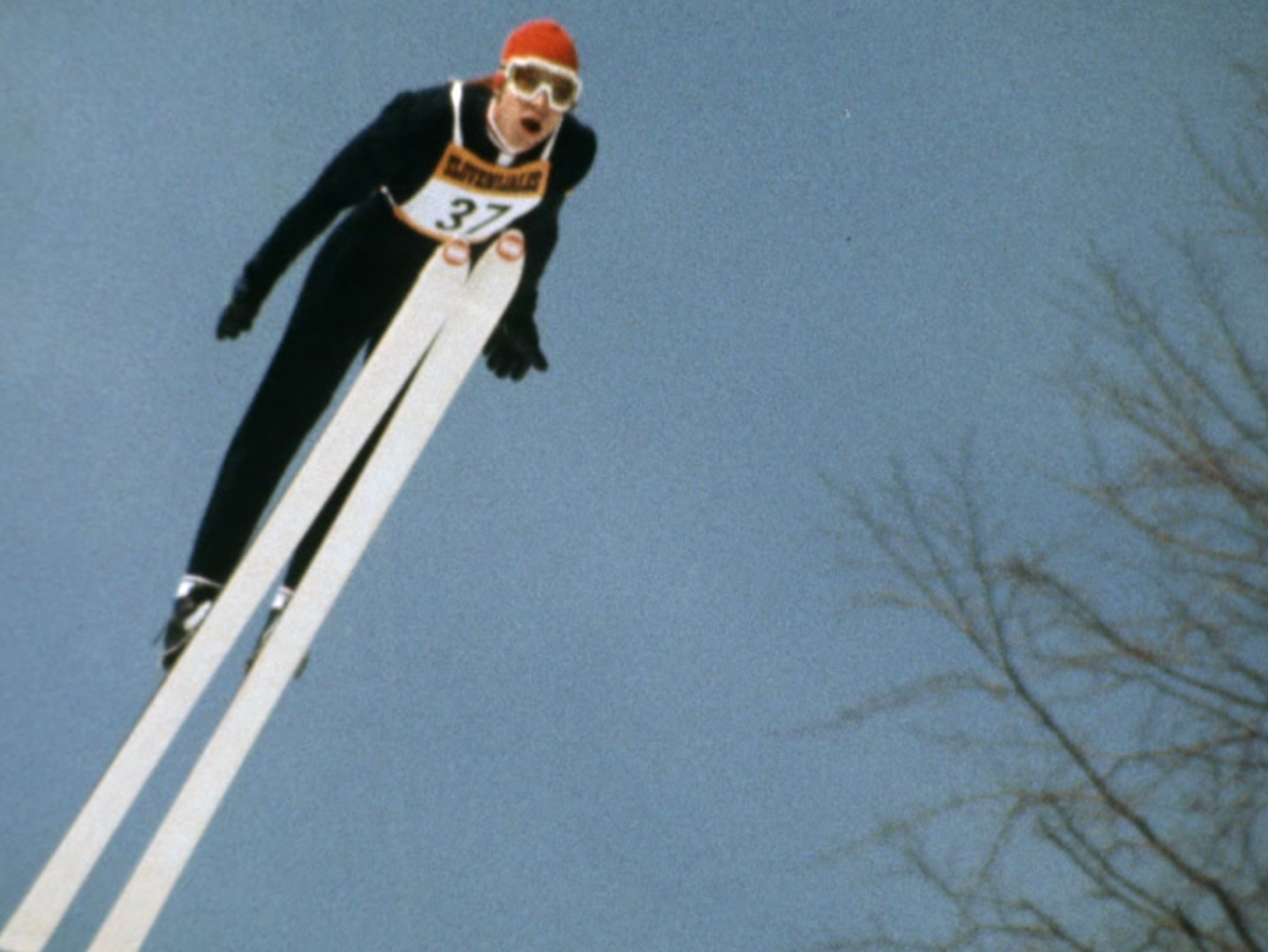
In the film The Great Ecstasy of Woodcarver Steiner, Werner Herzog documents the carpenter and ski-flying champion Walter Steiner, as his mad, death-defying flight shatters world records. Watching the shots in slow motion of this man flying, his mouth agape, his supple body arched to propel and elongate his airborne time for as long as possible, reminded me of classical Greek sculpture and how the Greeks portrayed sports in art.
The most famous example is the disc thrower, a crystallization of the moment just before the launch, when the body tenses and becomes pure potential. Portraying something's potential is always a far more interesting rendition than the realization of the potential itself, in this case the throw. (Bioy Cásares, for instance, notes that to depict a resting tiger is much more powerful than to portray a bare-fanged tiger lunging in attack. The imagination handles the rest, and the work of art invites contemplation and reflection.)
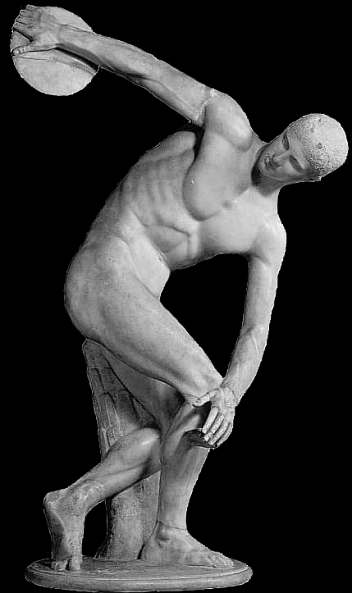
The Discobolos is similar to the opening scene of the film: Steiner carves a wooden sculpture where he says there is a region of explosion, of potential and energy. It is of course a symbol of his body right at the moment of the jump. There is such beauty in sport, and not just in the athleticism of the body, but of the spirit, too, its discipline, willpower, endurance, the whole preparation for that one moment of explosion. It is a quest, as Herzog's title proposes, for ecstasy, tearing apart human limitations and achieving something beyond this world. In Steiner's case, he achieves his childhood dream of flight. For a few seconds, his ecstasy renders him something of a flying squirrel.
These montages scored by Herzog's frequent collaborators, Popol Vuh, are in sharp contrast to the extreme modern commercialization and commodification of sports. We can’t watch sport without being flooded by advertisements. The sports themselves are just a half-time for commercials. Players and teams are transnational brands; sport a vehicle for soft power politics.
This is the dehumanization of sport, athleticism rendered a literal circus for the benefit of corporate mediocrities and rancid bureaucracy. The worst of the worst is FIFA, who has all but ruined my favorite sport. You can't even call football bread and circus anymore; they steal what crumbs we have left, and the circus has degenerated into a culture of shameless flopping, players screaming at refs without being penalized, grotesque six-figure weekly salaries. This is the least of its problems. FIFA right now faces a serious case at the International Criminal Court for its role in sports washing the genocide in Gaza.
For the Greeks, sport was not only part of an aesthetics. The Olympics entailed a spiritual practice, just like for Mesoamerican cultures with their famous ballgame. The latter were even rumored to sacrifice the winning team. And maybe that constitutes the greatest victory: in the moment of ecstasy, to have your heart ripped out of you for the gods to feast.